Fields of change – Under the Hill and Swansfleet join Lake Winnipeg protection effort
Water – despite the fact that we sit atop an aquifer – remains one of our most valuable and carefully monitored resources. Over the years, many have expressed concern about its use, particularly during the growing season, when local farmers often run irrigation pivots around the clock.
But the public is not alone in raising these concerns. Farmers, all levels of government, Indigeous Groups and major businesses share them, and for years have been working together to implement measures that promote water conservation and long-term sustainability.
On July 8, represent-atives from agricultural, environmental, academic, and governmental sectors gathered in southern Manitoba for a powerful, on-the-ground look at how farms are actively contributing to the protection of one of Canada’s most vital water bodies: Lake Winnipeg.
The Lake Winnipeg Basin Stewardship Project (LWBSP) is an innovative pilot initiative uniting food producers, environmental organizations, and sustainability experts in a shared mission of responsible water stewardship.
Eight major organizations – Nutrien, Simplot, Syngenta, Ducks Unlimited, Diageo, Maple Leaf, Cargill, and the Potato Sustainability Alliance – have joined forces to support four farms across 34,000 acres. Using the Alliance for Water Stewardship Standard, these farms developed customized water stewardship plans aimed at increasing sustainability, improving water use efficiency, and enhancing biodiversity.
During the tour, stakeholders had the opportunity to see these efforts firsthand. The group visited three farms – McIntosh Ventures, Swansfleet Alliance, and Under the Hill Farms – each demonstrating unique strategies to improve sustainability and soil health.
At McIntosh Ventures in Graysville near Carman, major strides have been made to prevent wind erosion and nutrient loss through reduced tillage and precision planting – methods that save money while protecting Lake Winnipeg from phosphorus runoff. Their cutting-edge “See and Spray” herbicide system, along with water recycling through irrigation reservoirs, highlights how technology is being integrated into environmental stewardship.
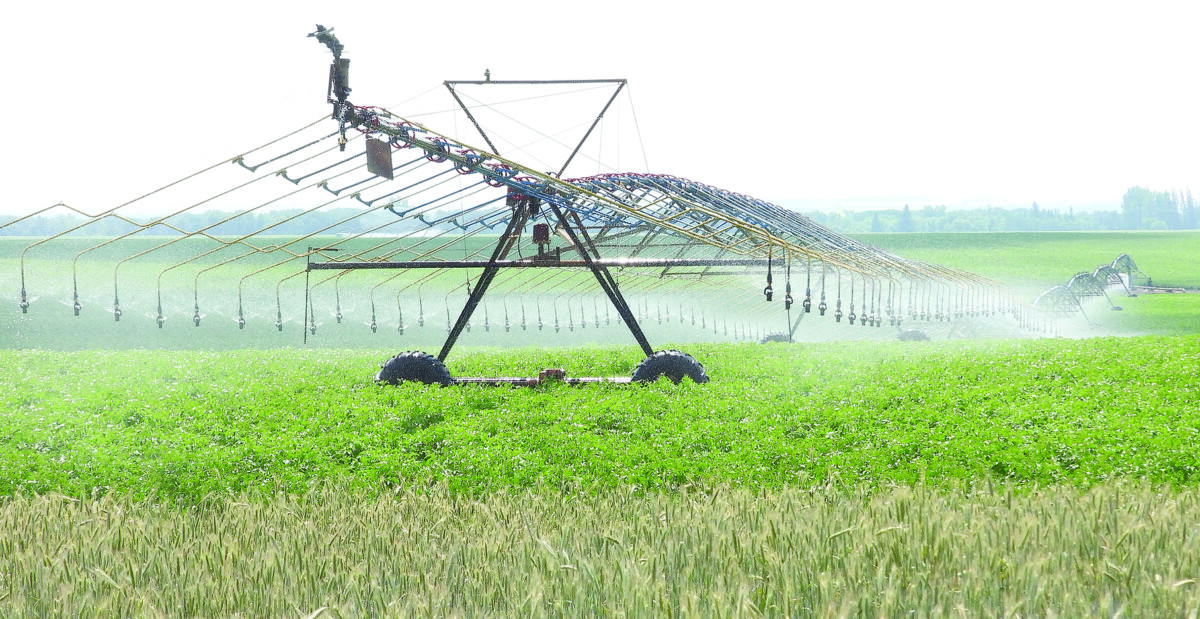
Outside of Glenboro, Chad Berry of Under the Hill Farms is advancing irrigation technology with Cascade Rain Nozzles and IntelliRain-equipped pivots, ensuring water is applied only where it’s needed – and in just the right amount. These precision methods reduce runoff, increase crop yield, and demonstrate how smart farming practices can benefit both the land and the watershed.
The Cascade Rain Nozzle system ensures water soaks in slowly matching the soil’s absorption rate, preventing run off and reducing waste. This paired with an Intellirain-equipped pivot, determines how much water is needed in different field zones.
Just down the road, in Bruxelles, Russell Jonk of Swansfleet Alliance has been focusing on the relationship between soil health and wildlife. By composting manure to improve soil fertility and intentionally preserving wildlife habitats around irrigation reservoirs, Swansfleet proves that productivity and biodiversity can go hand in hand.
“Our focus is mostly on finding alternatives to synthetic inputs and tillage to produce the same crop,” explained Jonk, noting that it’s all part of a broader toolkit aimed at improving soil health.
He shared that the partnership with the Lake Winnipeg Basin Stewardship Project began three to four years ago, when Simplot and Nutrien invited Swansfleet to join the initiative. “We were already doing a lot of these practices,” he said, “but now we’ve been given the tools to measure their effectiveness and actually see the impact. Going through the benchmarking made us ask questions and learn from other farmers and partners.”
EcoMetrix, a third-party company hired by the project, is tracking those impacts. “They’re noticing huge benefits – not just to soil health and water quality, but also to local watersheds, environmental conditions, and air quality,” Jonk added.
While Swansfleet has intentionally preserved wildlife habitats around their irrigation reservoirs, Jonk said it’s something that also evolved naturally.
“Ducks Unlimited suggested we do our hay cut mid- to late-July to allow waterfowl to use the areas for nesting. And that timing really made no difference to us since we’re not cattle farmers needing two cuts a year.”
Looking ahead, Swansfleet plans to continue exploring ways to avoid overwatering and maximize water-use efficiency.
As for what’s next: “We’ll never be able to eliminate synthetic inputs entirely,” Jonk acknowledged, “but we can find alternatives to reduce how much we use. That’s an ongoing project.”
Some regenerative practices are already gaining momentum, he said, like cover cropping – particularly in potato and bean production – where producers are beginning to see measurable improvements.
When asked what advice he would give to producers interested in adopting more regenerative or biodiversity-friendly practices, Jonk kept it simple but strategic: “I would suggest they think about what they want to achieve; have a goal, and work backwards from there. Figure out the outcomes you want, keep your budget in mind, and choose the right tools for the job.”
These examples show that sustainability isn’t just a buzzword – it’s a working model that’s gaining traction in the fields of southern Manitoba.
As farms like these continue to invest in smart technologies and stewardship practices, they’re not only protecting Lake Winnipeg, but also paving the way for a more resilient and responsible future in agriculture.
PHOTO CAPTION: Many farms are using advanced technology to promote water conservation and long-term sustainability, including Under the Hill Farms who have switched to Cascade Rain nozzles that matches the waterfall with soil absorbtion rates to prevent run-off. PHOTO BY SUZANNE PADDOCK