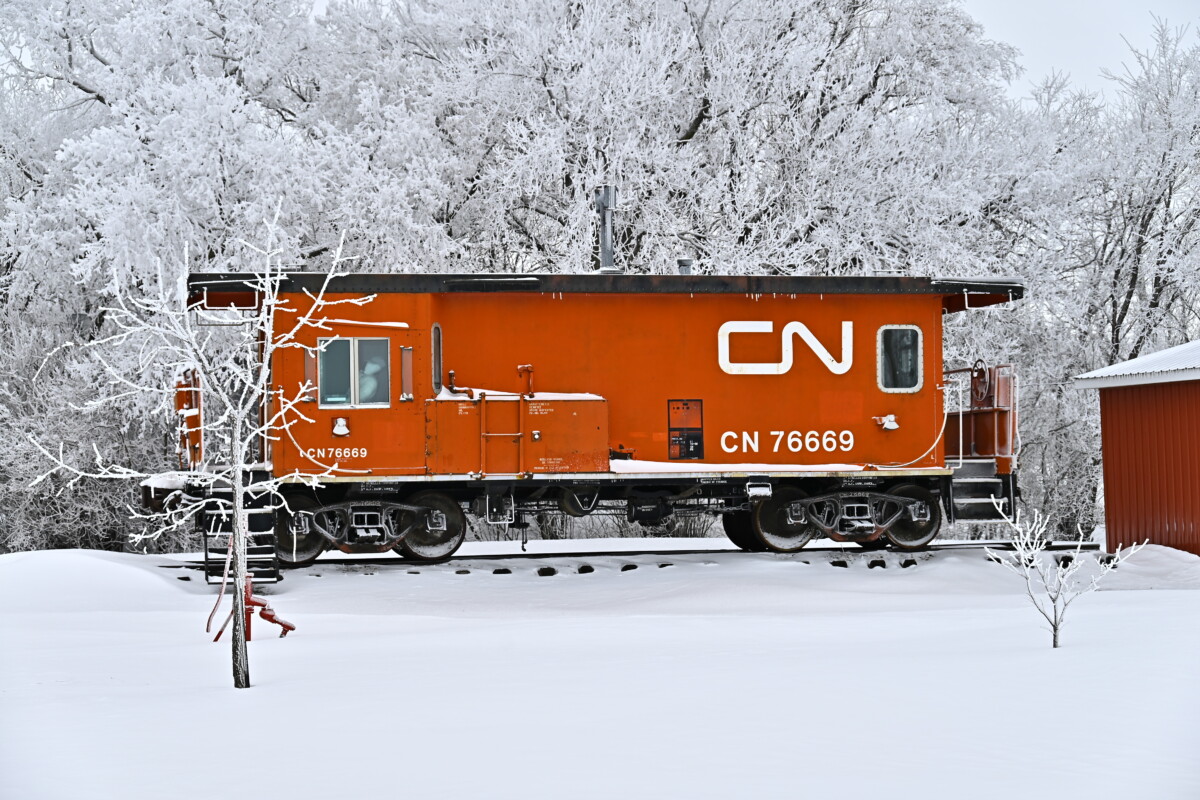
The legacy of the caboose continues to be celebrated
In Manitoba, the Canadian National Railway (CN) caboose played a significant role in both freight train operations and the region’s cultural landscape.
By the time the CN was formed in 1919, many railways in Manitoba had already adopted cabooses. These cars were essential to railway operations, providing space for crew members to handle paperwork and serving as a lookout to spot potential issues on the rail line.
The CN caboose was characterized by its distinctive red colour and unique design. These small but sturdy cars often featured raised platforms, allowing crew members to have a panoramic view of the train and tracks. In Manitoba, where the landscape is vast and often remote, this feature was crucial for ensuring safe travel across the province’s extensive rail network.
Throughout the mid-20th century, rail traffic in Manitoba significantly increased, particularly as the agricultural industry boomed. The CN caboose became synonymous with freight movement across the prairies, often seen shuttling between grain elevators and major urban centers like Winnipeg. These wooden and later steel-bodied cabooses were more than just functional equipment; they represented a vital connection for communities, facilitating the transport of goods and contributing to the region’s economic development.
However, as rail technology advanced and operations became more automated, the role of the caboose began to decline. The introduction of end-of-train devices in the 1980s eliminated the need for a physical caboose, leading to their phased-out use in train operations. By the late 1990s, traditional CN cabooses had become obsolete in Manitoba and were retired, replaced by technological solutions that increased efficiency and reduced labour costs.
Despite their decline in operational use, CN cabooses hold a nostalgic place in the hearts of railway enthusiasts and the communities they served. Many retired cabooses can now be found in parks, museums, and private collections, preserved as symbols of Manitoba’s rail history. Organizations dedicated to railway preservation often work to restore these unique cars, allowing future generations to appreciate the craftsmanship and cultural significance of the CN caboose.
The legacy of the caboose continues to be celebrated, reminding us of a time when railroads were the backbone of transport in Canada.