Squeal on Pigs program has made significant advancements
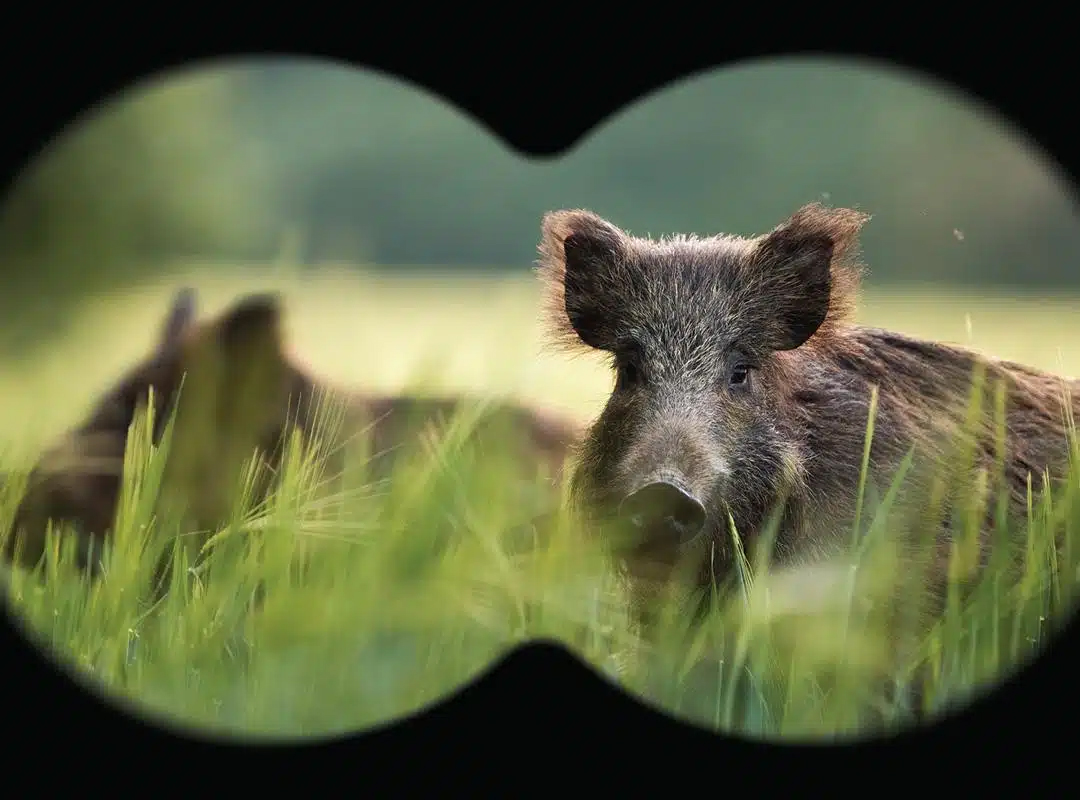
The Squeal on Pigs Manitoba Program Update for 2024 was recently released and included some pleasant surprises.
When the Squeal on Pigs Campaign was launched in 2021/22, its goal was to initially control and ultimately eliminate invasive wild pigs from the province. Since then, a great deal has been learned, and there have been several changes in methodology.
“Within a few short years, we have made significant advancements in better understanding the geographical extent of the issue, what factors influence the wild pig population, and how to modify our surveillance and removal techniques to function effectively under Manitoba’s cold climate conditions.”
This has happened as a result of Squeal on Pigs Manitoba operating “as a collaboration point between the swine sector, provincial departments of agriculture and natural resources, First Nations and Metis communities, non-governmental interest groups, environmental organizations, federal and provincial parks and the Canadian Food Inspection Agency.”
The Year in Review report submitted by Dr. Wayne Lees, Coordinator of Squeal on Pigs Manitoba, and Devon Baete, Field Operations Manager, shared a great deal of information:
“In March 2024, we completed our 2023-2024 funding agreement with the African Swine Fever (ASF) Prevention and Preparedness program.”
To be able to carry on the ASF Program, Squeal on Pigs Manitoba was able to secure “multi-year funding to March 2028 under the Sustainable Canadian Agricultural Partnership program, operated by the Governments of Canada and Manitoba, and in partnership with Manitoba Pork.”
Field operations in 2024 received calls of sightings from across Manitoba. However, they noted that there appeared to be a hotspot in the Spruce Woods area where they have found an established breeding population. Field operations have been granted permission to work within Spruce Woods Park with “two additional seasonal field technicians working in that area.”
Other 2024 Year in Review highlights include:
* Field technicians now have access to thermal imaging drones, which have proven to be a game-changer for detecting wild pigs in heavy crop cover or forested areas.
* A network of over 100 cell-enabled trail cameras is spread across the province, which enables monitoring surveillance sites and checking traps without leaving human scent. This shared access promotes timely communication with field technicians whenever wild pigs are captured.
* An inventory of 30 traps. Two different traps are currently being used: the original rigid corral panel traps and net traps. Devon Baete has been successfully trialing the placement of net traps, and has found that the net traps work significantly better than the rigid corral traps “in more remote, wooded areas.”
* Operating procedures for data collection have been introduced to allow for standardized population analysis. Captured pigs will have pertinent data, including age, sex, and body condition scores recorded in addition to having spleen samples taken for ASF surveillance.
With everything that has been learned since the inception of the Squeal on Pigs Manitoba program, and the additional equipment now available for use, in 2024, 204 pigs were successfully removed, up drastically from 2023, where it was reported that 127 pigs were removed and in 2022, where 122 pigs were removed.
In April of 2024, the first Canadian Wild Pig Summit was held in Brandon. This highly successful event was a collaboration between Squeal on Pigs Manitoba, Animal Health Canada, and Assiniboine College.
This event brought together presenters from Canada, the United States and Germany to share information, lessons and best practices.
Through this process, it was shown “that the wild pig situation in Canada is markedly different from other countries. While we can learn from experiences in other countries, our cold climate presents unique circumstances that act to limit wild pig population expansion. Limited feed availability, severe environmental conditions, a slower rate of growth, longer time to reach sexual maturity, and hazards from predation, natural attrition and disease all have an impact. We also discussed the challenges of maintaining equipment and conducting fieldwork under cold climate conditions. These lessons emphasized that surveillance and control methodologies and equipment must be adapted to our climatic setting.”
This information is good news for Manitoba.
“As a result of our findings coupled with Squeal on Pigs Manitoba field experiences, we have concluded that the wild pig situation in Canada is very different from the wild pig problem in the United States, Australia, Asia, or Europe.”
According to the Report, Squeal on Pigs Manitoba “partnerships include individual landowners, First Nations and Metis communities, non-government and government organizations within Manitoba, federal departments, academic institutions, and national animal health and environmental organizations. Moving forward, Squeal on Pigs Manitoba will seek additional collaborative opportunities to reach our common goal – to rid Manitoba of this invasive animal species.”
The question is asked again and again: Why not just let hunters go in and harvest wild pigs?
The report shared, “we observe that Canadian wild pigs on the prairies typically forage on native feeds (acorns and grubs), tend to be mobile within their home range, and stay in small groups. All these factors mean that control methods developed abroad must be adapted to our unique conditions. There has been much debate as to the efficacy of hunting as a control measure for wild pigs. Our field analysis supports the findings in other jurisdictions that recreational hunting is not effective in controlling wild pigs, and in fact, may disperse the population into new areas. Eurasian wild boar are nocturnal and will stay hidden during the day, even when bait is available. Those hunters who do occasionally see wild pigs are most likely to do so by chance while hunting other species. If they do encounter a sounder of pigs, hunters often remove only one or two, dispersing the rest. We have defined the first encounter removal rate as how many pigs are removed from a sounder of pigs when they are first encountered. The success rate of hunting is low; just 12.5% of the pigs are removed, on average. In contrast, our success rate with trapping is seven times higher; 82% of the pigs seen on camera are trapped the first time. Trapping has the added benefit of not frightening off and dispersing the pigs, allowing the remainder to be captured within a day or two.”
The data collected has shown that the birth rates and population growth rates are significantly lower than originally projected.
“By analyzing the data collected over the last three years, we can create a virtual, ongoing census of the population makeup. Looking at the age distribution, we discovered that the largest segment comprises mature animals, followed by juveniles and then weanlings/piglets. This supports our working hypothesis that the birth rate, and hence the population growth rate, is much lower than initially assumed.”
What does this mean?
“We can reasonably conclude that the population density of wild pigs in Manitoba is much lower than that reported in the United States. Our working estimate is that the provincial wild pig population probably numbers in the range from the high hundreds to low thousands. This gives us optimism that this invasive species can eventually be eliminated from the province. It will take perseverance and commitment, but it is achievable.”
Be part of the solution, and report wild pig sightings! Sightings can be reported online at squealonpigsmb.org or by calling the hotline at 1-833-776-8744.