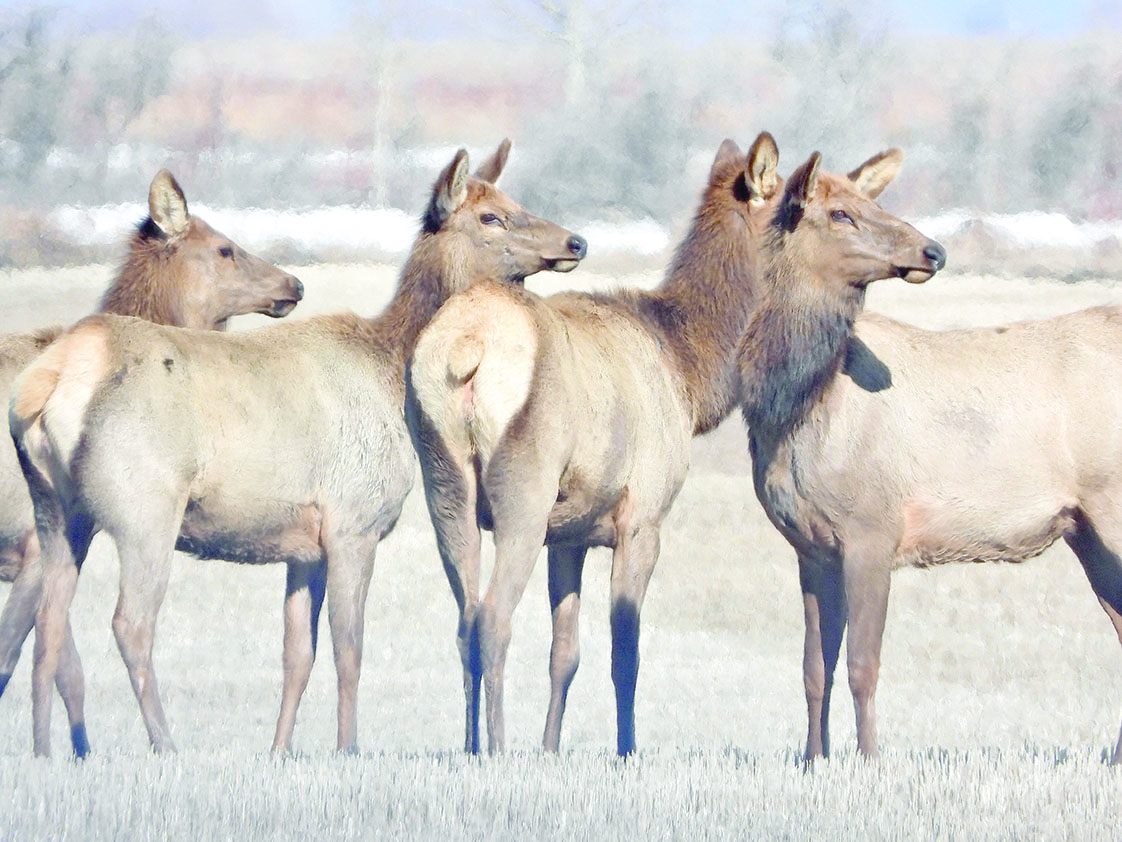
Elk were almost extinct, they are now becoming a problem
We have many very large herds of elk in our neck of the woods, making it hard to believe that in the 1900’s they were hunted almost to extinction. Since that time, through careful management, their numbers have grown substantially.
The Manitoba elk is one of four subspecies of elk, the others are: Tule elk, Roosevelt elk, and Rocky Mountain elk.
Preferring woodlands and clear cuts, Manitoba elk are found not only in Manitoba, but also Saskatchewan and Alberta.
These enormous beasts have a lifespan of up to 20 years, can weigh up to 1,000 pounds, reach 5 feet tall at the shoulder, and have a length of 8 feet. Although these animals are very large, they are also incredibly agile, being able to jump 8 feet vertically.
Generally between January and April, the bulls will drop their antlers which are quickly replaced with a new set that can grow more than an inch per day. The new antlers are covered in a soft protective layer called velvet, that eventually dries and is rubbed off revealing the new set they will use during rut to fight other males. Their antlers can grow up to four feet long and weigh 40 pounds.
During prehistoric times, elk were outfitted with tusks they used for fighting. Today, they still have small upper canine teeth, a reminder of their forefather’s tusks. Although the canine teeth are too small to cause any damage, bulls will show their canines before charging, but will use hooves or antlers in the attack. It is believed that baring their teeth is part of ancient behaviour patterns.
Mating season usually occurs from mid to late September to early to mid October. The calves are born approximately 260 days later. A cow leaves the herd to give birth, returning approximately 2 weeks later when the calf is strong enough to keep up with the herd. By the time the calf is two months old, it is weaned and reaches maturity at only 16 months.
Manitoba elk are another of our wild neighbours we share the vast prairies with.
PHOTO CAPTION: Large herds of elk have been circulating in the local area this past year, with as many as 600 having been spotted together. PHOTO BY SUZANNE PADDOCK