AEDs in your community
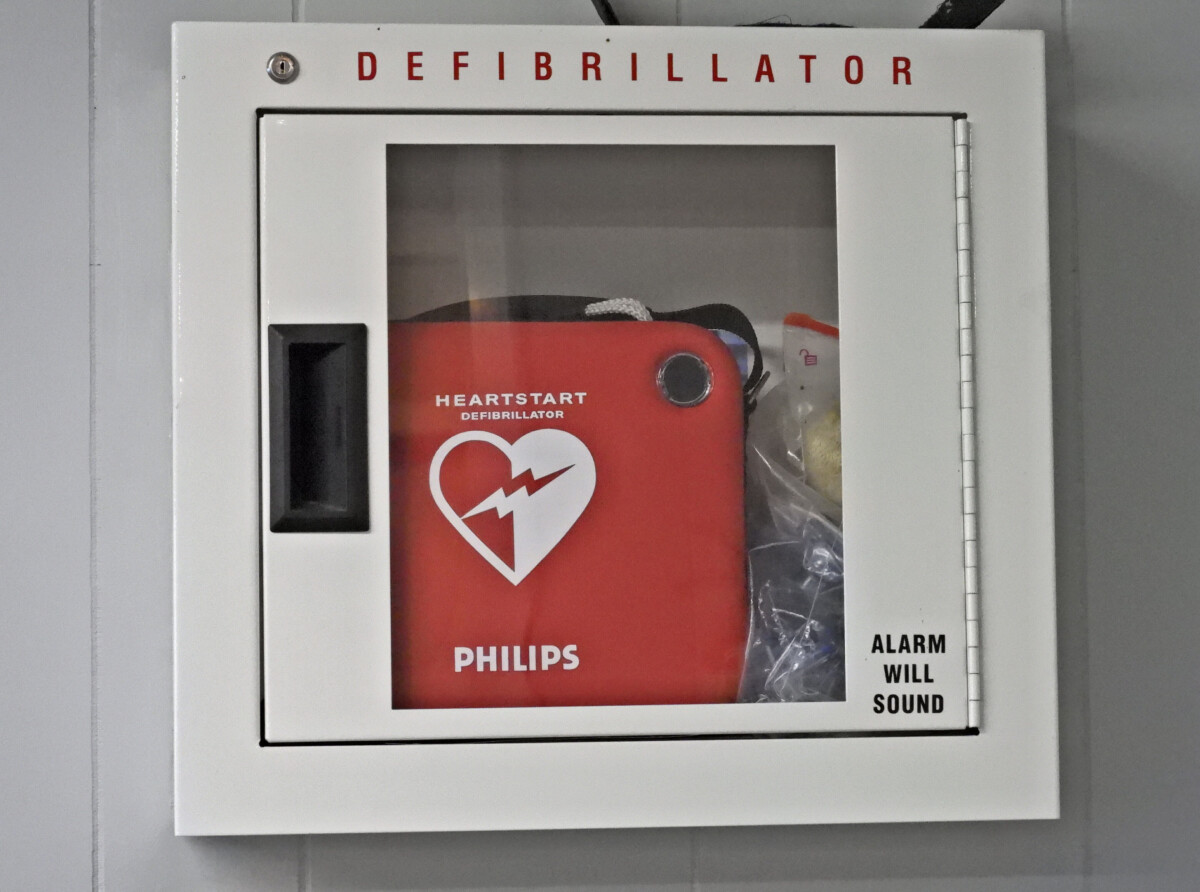
Automated External Defibrillators, commonly referred to as AEDs are a potentially lifesaving device.
Contrary to popular belief, an AED doesn’t simply provide an electric jolt to someone having a heart related episode, they are much more complicated than that.
Once attached to the person having a potential cardiac related episode, the AED first analyzes the person’s heart rhythm. If the machine determines it should be utilized, it then delivers an electrical current in order to assist the heart in resetting and resuming its normal rhythm.
According to AED.ca:
An Automated External Defibrillator (AED) is a portable device designed to restore a normal heart rhythm in cases of sudden cardiac arrest (SCA). Unlike a heart attack, which involves blocked blood flow to the heart, SCA occurs when the heart suddenly stops beating effectively due to irregular electrical activity.
The AED devices that are found throughout Manitoba are very user friendly and easy to use even for someone who has never been introduced to an AED before.
911 should always be contacted during a medical emergency. They are trained professionals that are able to guide anyone in attendance through appropriate steps, asking pointed questions to gain a clearer understanding of the situation, and to assist the responding person in offering the person suffering the emergency the most appropriate care.
On January 31st, 2014, the Manitoba Defibrillator Public Access Act was instituted.
This Act paved the way to ensure that Automated External Defibrillators (AEDs) would be available for use in many public buildings throughout Manitoba, that have high foot traffic.
There are, of course, some stipulations that need to be met prior to the installation of the AED equipment becoming mandatory.
According to the Act, the buildings that are to have an AED available are as follows:
Fitness clubs, gyms and other facilities
These include gyms, studios or similar facilities that permit their members or other patrons to use their premises, services or equipment for exercise, fitness training, bodybuilding or a similar purpose. This includes facilities that either have 150 or more individual members, or in which at least 20 hours of indoor group physical-activity programs are held in the majority of weeks in a year. This would include martial arts facilities, dance studios and wellness centres that meet the membership or group activity frequency guidelines.
Community Centres
A community recreational facility must have an AED if it has at least 20 hours of indoor group physical-activity programs held in the majority of weeks in a year.
The AED must be made publicly accessible to the indoor portions of community centres during their regular hours of operation. If an outdoor activity takes place on the community centre’s outdoor property while the community centre building is closed or locked, there will be no access to the AED. If an outdoor activity takes place on the community centre’s outdoor property while the centre is open, there will be access to the AED, but access may not be within the three-minute time frame for access generally applicable to designated premises.
Golf Courses
AEDs must be located in the club houses on golf courses.
– Other athletic facilities, including: indoor public swimming pools; indoor arenas used primarily for hockey or other ice-skating activities; curling clubs.
– Schools, colleges and universities. All schools, including public and private schools, elementary, junior high and high schools. For universities and colleges, AEDs are required for athletic facilities such as gyms, arenas and other indoor athletic facilities.
Airports, train and bus stations
Airport passenger terminals, used for passengers to gather before boarding or after exiting an aircraft. Passenger train terminals used primarily for passengers to gather before boarding or after exiting a train. Bus stations used primarily for passengers to gather before boarding or after exiting a bus. This does not include urban transit bus stations. These terminals and stations do not include rural sites used primarily for another purpose at which passengers also gather, e.g., a store.”
The above noted locations were chosen after much research was done and information collected, as well as receiving advice from a variety of experts, including the Heart and Stroke Foundation, paramedics, 911 data, and other public consultations.
Although not mandated, many other venues, including private businesses have added AED equipment, which is an added safety benefit for the entire community they are located in.
Unfortunately, most people don’t know where the AEDs are located within their own communities, or the hours they are accessible.
Should we all be more proactive and educate ourselves?
It is always hoped that no one will ever need to be assisted by an AED, but it is a comfort to know that they are available if needed.