Local firefighters sharpen their skills
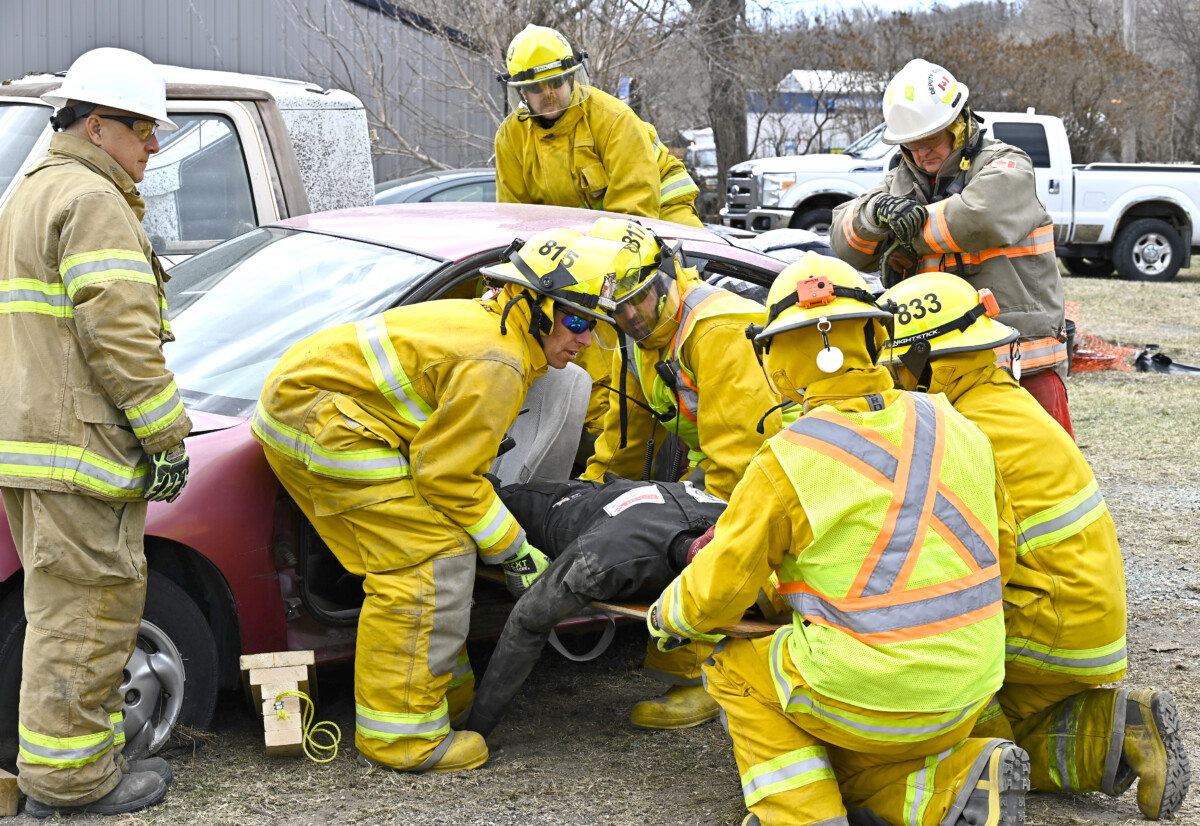
The Ninette Fire Department holds Vehicle Extrication Training Exercise in Ninette on April 25 & 26.
Ninette Fire Department Chief Glenn Braun shared his thoughts after another busy weekend, which included Vehicle Extrication Exercises in Ninette, saying, “The Ninette Fire Department is one of three in the RM of Prairie Lakes and one of nine in the Turtle Mountain Mutual Aid District. Our training exercises are open to all members of this Mutual Aid group.
This past weekend, we had 9 members from Ninette and 2 from Baldur in attendance. The weekend prior, we had 4 of our members, along with others from Dunrea, Glenboro, and Holland, all participating in a Wildland Fire training course in Holland.”
Are there different training courses held throughout the year?
“Yes, courses are held throughout the year. All firefighters must complete First Aid and ICS 100 to participate in the others. In the coming weeks, Holland will be hosting a Vehicle Ex course, and Ninette and Holland are both hosting Pump Operations training.
We have a training officer, Alex Doucet, who works with the Fire College in Brandon to set up courses for the departments. He works with our Mutual Aid Coordinator, Kendra Simpson, to stay informed and educated.”
Is it compulsory for our volunteer firefighters to take part in these extra certification courses to maintain their certifications?
“Courses are not compulsory, but are recommended. As an example, Ninette has 11 members trained in Open Water rescue and 10 in Ice Rescue. Most members have traffic control, and now 15 of 23 have Vehicle Extrication training.
The members of our department take the training best suited to the calls we attend or may attend. Together with the RM, the Mutual Aid group, and the Fire College, we hope to make our district a safer and more welcoming place to live.”
As we all know, our rural volunteer fire departments in Manitoba play a crucial role in ensuring the safety and well-being of their communities. To effectively prepare for emergencies and enhance their response capabilities, these department members, on their own time, take part in various training courses.
Firefighting is a complex and demanding position that requires a wide range of skills. Training courses help them stay up to date on the latest techniques, equipment, and safety protocols. By enhancing their skills and knowledge, firefighters are better equipped to handle emergencies, whether they involve a structural fire, a wildland fire, or a medical emergency.
Rural areas often face unique challenges, such as difficult terrain, limited resources, and incident types that may not be common in these settings. These additional training courses allow firefighters to practice and learn to adapt to these specific challenges. This preparation can lead to quicker, more effective responses during real emergencies.
Training courses emphasize the importance of safety procedures and personal protective gear. By participating in these courses, firefighters learn how to minimize risks to themselves and others while performing their duties. This focus on safety helps to reduce injuries and improve overall morale within the department.
Firefighting is not a solo effort, it involves teamwork and coordination among not only the members of a specific firehall but also with Mutual Aid members. Training courses help foster strong communication skills and collaboration among all involved firefighters. By working together in a training environment, firefighters build trust and improve their ability to work as a cohesive unit during real-life incidents.
This commitment to professional growth not only benefits individual firefighters but also strengthens the fire department’s overall capabilities.
In rural areas, fire departments often operate with limited resources. Training courses equip firefighters with the skills to maximize the use of available equipment and tools. Understanding how to effectively use resources can mean the difference between quickly controlling a fire and facing a larger disaster.
Training courses for firefighters in rural Manitoba are not just about learning new skills; they are a vital component of maintaining an effective, safe, and responsive fire service.
By investing in education and training, rural fire departments ensure their firefighters are well-prepared to protect their communities, handle emergencies effectively, and contribute to a culture of safety and teamwork.
As the demands on our local volunteer fire departments evolve, ongoing training will remain essential in meeting those challenges head-on.
Thank you to all of our volunteer firefighters!
MISSION NEARING COMPLETION: In a mock accident exercise, firefighters used their extrication skills to get the victim out of the vehicle he was trapped inside. They had to gain access by removing the driver’s door. PHOTO BY SUZANNE PADDOCK